VB Secret Challenges
2025- · Community
VB Secret Challenges started in June 2025 as a hobby of collecting Strava badges. It became a hub that gathers secret challenges from verified brands and clubs, a community of over a thousand people that formed around it, with no paid promotion, and, since 30 September 2026, a web platform with the catalog, search and status of the challenges.
- Role
- Founder
- Outcome
- +1,180 members and 93 drops
Context
VB Secret Challenges started as a hobby: collecting Strava badges. Each badge records a real effort, and many of the challenges that award them never show up in the app. They exist, but they stay hidden.
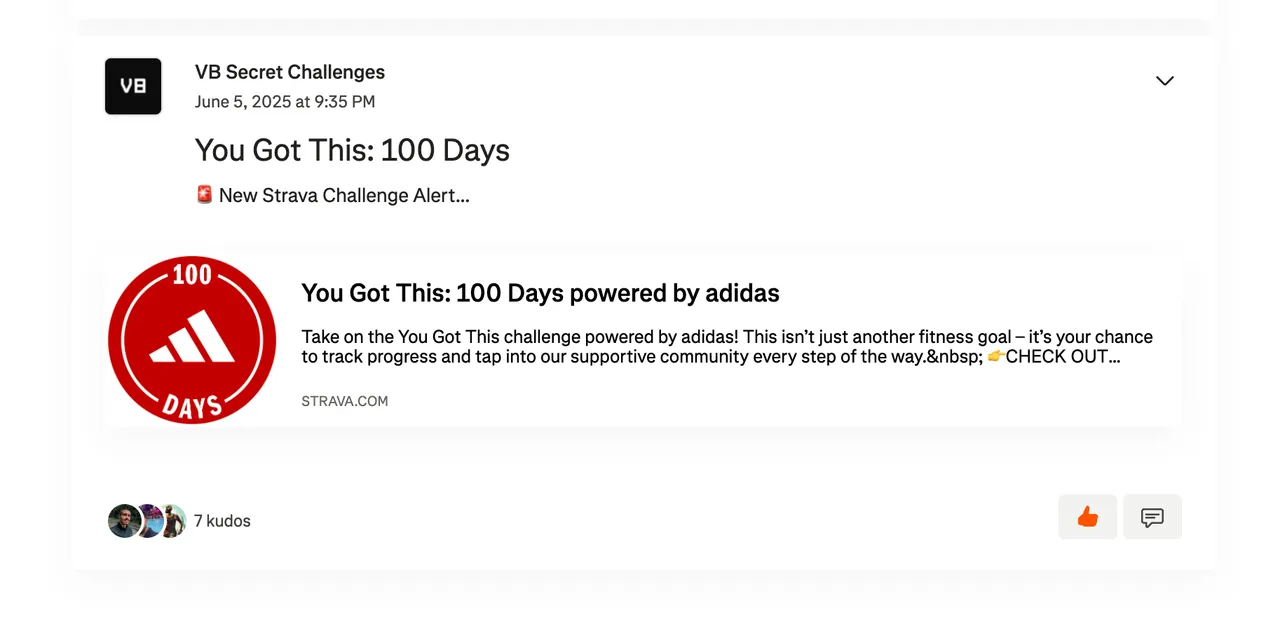
I was already looking for them, following them and keeping track of them on a regular basis. On 5 June 2025, I published the first post in a Strava club. The project was called VB Hub. On 9 December 2025, it became VB Secret Challenges, the club's name today.
What I did
I did all of it, from the idea to the growth: I came up with it, planned it, built it and curate the content. The project has two fronts: the club, where I publish the drops, and a web platform with the catalog of challenges.
The drops
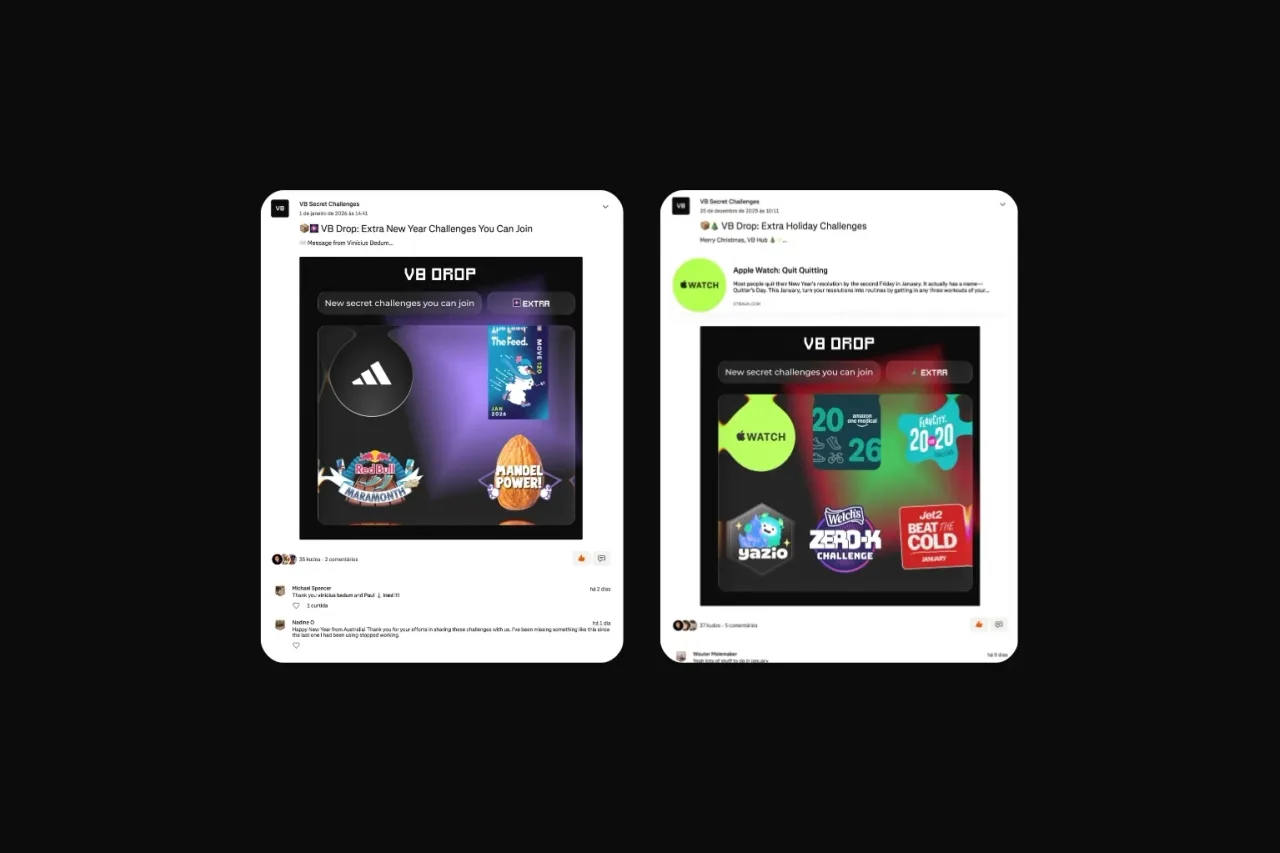
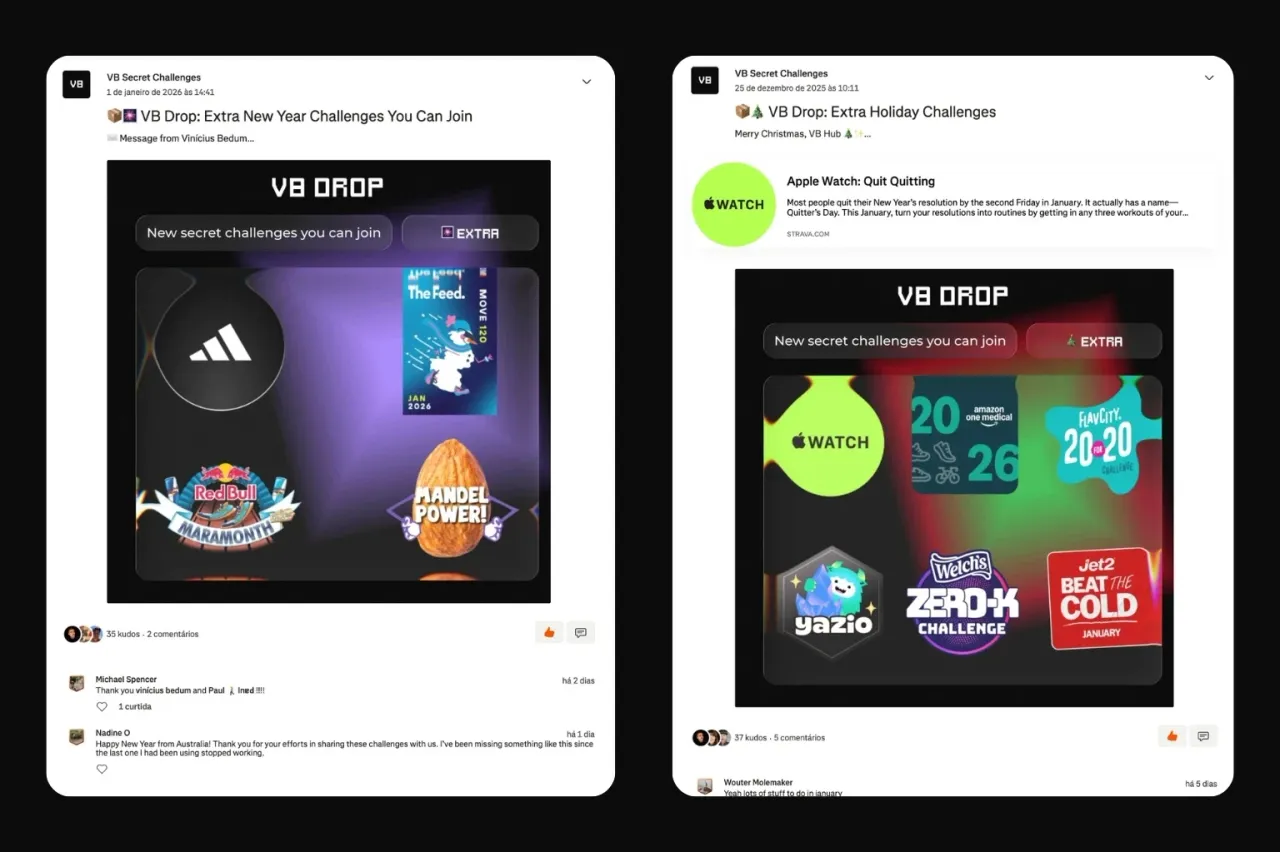
Every weekend, after curating, a drop goes out with the week's challenges. The post carries the dates, the official link, the prizes and who can take part. It is valid for any Strava user. Four rules guide the curation:
- only challenges from verified brands and clubs;
- only challenges open to the world, no local challenges;
- only official Strava links;
- no information overload.
To keep the pace, I built a process:
- A Python script reads the public page of each challenge, because Strava has no public API for challenges.
- I write the post text with Claude Code, using a skill of my own.
- The art comes from a Figma template, with room for 7 badges.
The limits of the art tools left part of this step manual.
From manual curation to a platform
The drop solved the week, but it had a limit: the post stays in the feed and fades with time. Whoever arrives later does not know what is still valid, what is ending or what just arrived. And Strava has no list of the secret challenges.
On 30 September 2026 I put the first version of a web platform with the catalog online. It does what the drop could not:
- Three rails: Soon, Active and Too late. The phase comes from the date and is never set by hand.
- Search across all challenges, with the ones still running first.
- A view with only the challenges open to the world, the same rule as the drops. Local ones appear apart, and each card says whether the challenge is for all Strava users or local only.
- Signals on the card: an orange chip on the last day and a blue "New" badge for the first days. The badge goes away for whoever opened the challenge, and that memory stays on the person's own device.
- Portuguese and English, on computer and phone. On a phone, the community link opens the Strava app directly.
The data comes in through a tool of my own that reads the public pages of the challenges, and an importer checks each one before it goes into the database. The platform recognizes on its own whether a challenge is local. For privacy, I keep only the yes or no, and nothing about the segment is saved.
With the platform, the post changes too. The idea from here on is to have a single text that points straight to the app, where all the challenges are. Each week, only the art changes.
How it was built
I built the first version in two days, with Claude Code and Codex. I understand code, and even so the gain was big: what would take several weeks came out in a few days. The site uses Next.js and TypeScript, the database is Postgres on Supabase and it is hosted on Vercel. I handled security and privacy from the start.
The community
The badges are the starting point. What formed around them is a community: people who come back every week, say thanks and suggest challenges. About 10% of the members contribute suggestions.
I reply as much as I can. On 10 November 2025, I asked what they thought of the drop format. I have no case studies to show. I have thank-yous.
Result
Club numbers as of 29 September 2026:
- 1,186 members in the club, all organic, with no ads or paid promotion.
- 130 posts since 5 June 2025, 93 of them drops.
- 5,557 kudos and 380 comments. About 60% of the comments came from members, and the rest are my replies.
- About 10% of members contribute challenge suggestions.
The platform went live on 30 September 2026. I do not have usage numbers yet.
A hobby of collecting badges became a weekly hub, a community of over a thousand people and a platform that organizes all of it.
Next step
The platform is live, but the cycle is not closed yet. Still missing:
- finding the secret challenges on its own, without me passing the numbers. It depends on an authorization from Strava, which I still have to ask for;
- a domain of its own and measuring usage, respecting privacy;
- a space for brands to promote their projects for a period, for a fee. It is still a plan.
Voluntary support already exists: a "buy me a coffee" button in the footer.
Development
2026-10-01
The "New" badge for recent challenges, search with running challenges first and the site's security policy went in.
2026-09-30
The first version of the platform went live.
2026-06-22
The club reached 1,000 members.
2026-06-11
I tested the first automation of the drop process.
2026-04-19
The club reached 800 members.
2025-12-09
VB Hub became VB Secret Challenges.
2025-06-05
First post in the club, about a 100-day challenge from a sports brand.
Sources and further reading
Platform · Web
VB Secret ChallengesChallenge catalog
The platform that lists the secret challenges, with search, status and a view of only the open ones.