Opentitled
2023-2023 · Web3
- Role
- Artist and creator
- Outcome
- 182 pieces minted across 3 phases
Summary
Opentitled is a digital art system in three phases, with the blockchain as the record. Then the work left the screen and was shown in physical spaces.
- Idea: use the blockchain as the record, evolution and history of the work, not as a showcase.
- What I did: I created the three collections and the contracts on my own: a free edition, an on-chain burn that generated new works and a final collection on Ethereum.
- Result: 182 pieces across three collections and exhibitions at Casa NUA, in São Paulo, and at NFT NYC.
- Stack: ERC-721 contracts on Polygon and Ethereum.
- Background: my own art project, from 2023.
Full case
5 min read
Context
I created Opentitled as an experiment. It was not born as a collection.
It is an art system. In it, the blockchain works as record, evolution and history, and not as a showcase.
I designed each phase to stand on its own and also as part of a larger cycle.
What I did
I was the artist and the creator of the project. I did everything on my own, from the idea to the contract and from the three collections to the exhibitions.
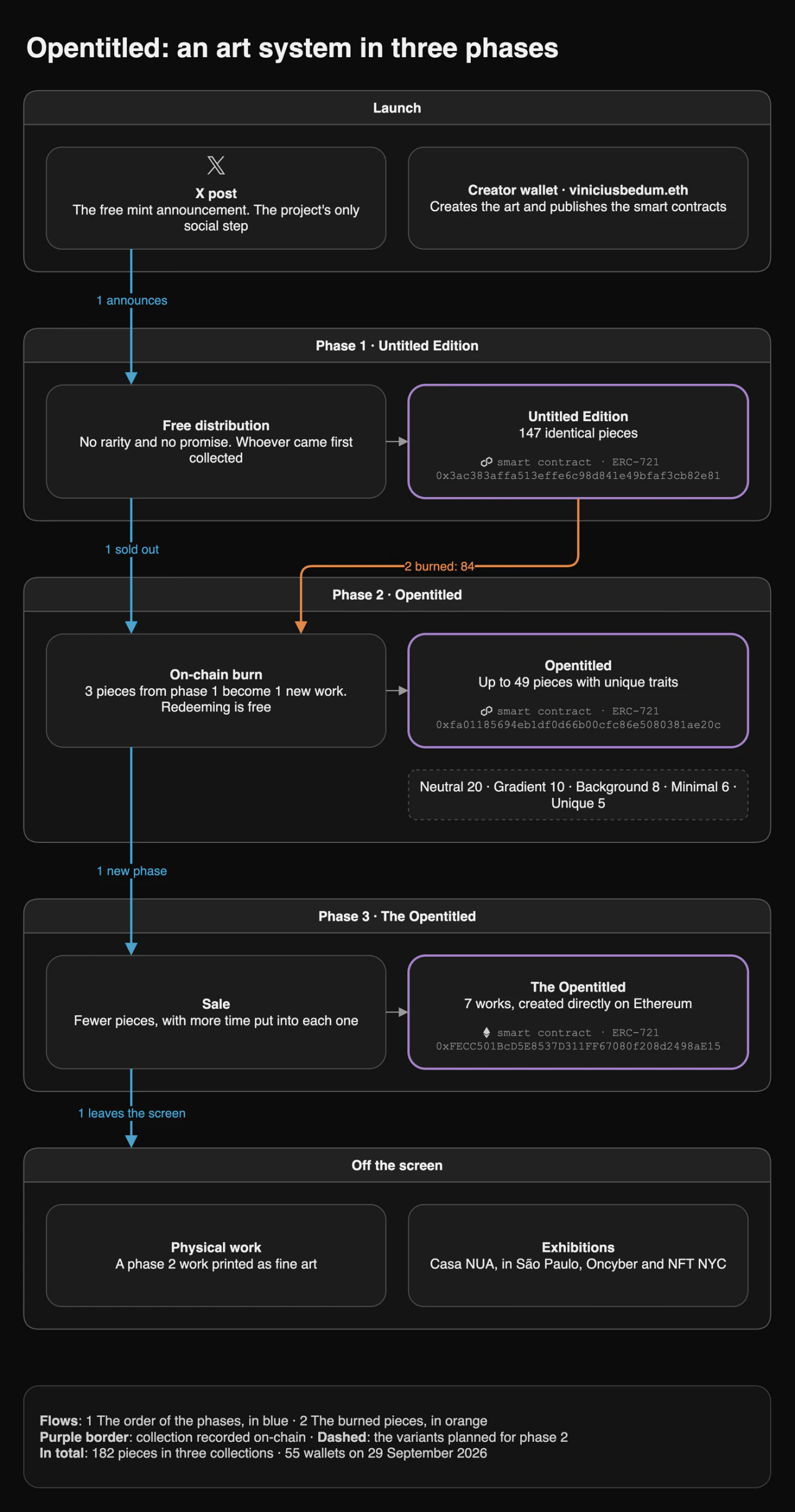
The system has three phases: the Untitled Edition, the Opentitled and The Opentitled.
Untitled Edition
The first phase was the Untitled Edition, with 147 identical pieces on the ERC-721 standard. All of them shared the same visual base.
It started from a post on X, after a first draft.
There was no rarity, no aesthetic differentiation and no future promise.
The works were given away for free. Whoever arrived first collected, and whoever arrived later missed out.
After it sold out, the works began circulating on the secondary market, among people who saw value in that first record. The logic was simple: exist, register and begin.
On-chain record: Untitled Edition collection · contract · Polygon · ERC-721
Opentitled
The second phase introduced an on-chain burn system, explained in this post on X.
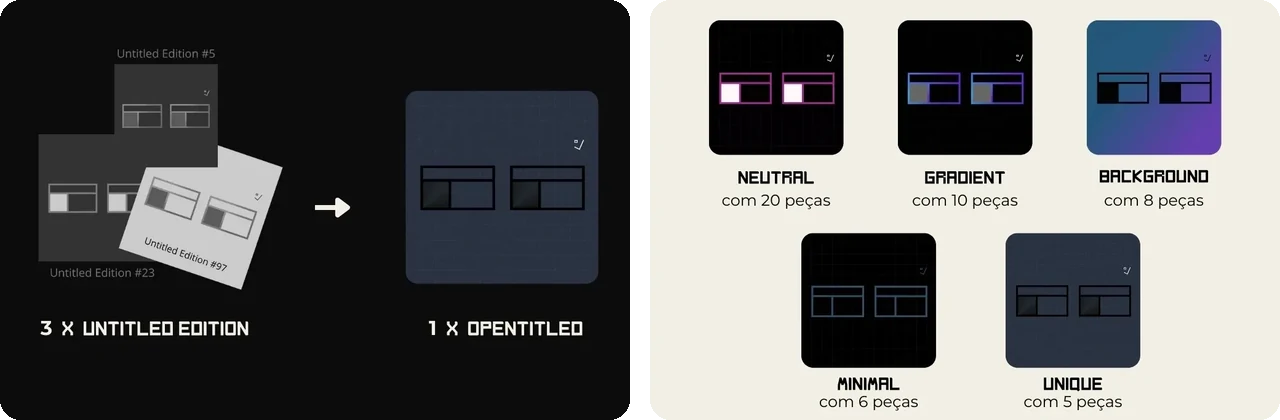
Whoever held 3 pieces of the Untitled Edition could choose to burn them to redeem a new work: the Opentitled.
I built the contract to accept 49 pieces, in five variants:
- Neutral, with 20 pieces
- Gradient, with 10 pieces
- Background, with 8 pieces
- Minimal, with 6 pieces
- Unique, with 5 pieces
The new pieces were unique, visually distinct and a direct result of the on-chain burn.
It was not a purchase or a paid upgrade. It was transformation.
The redemption was free and, once again, whoever arrived later missed out.
The point was to make clear that value can also come from the act of letting go.
On-chain record: Opentitled collection · contract · Polygon · ERC-721
The Opentitled
The third phase changed the pace.
I created The Opentitled directly on the Ethereum blockchain, with 7 units.
This time there was no free distribution. The works were put up for sale.
The idea was to concentrate instead of scale. There were fewer pieces, with more intent and more time involved.
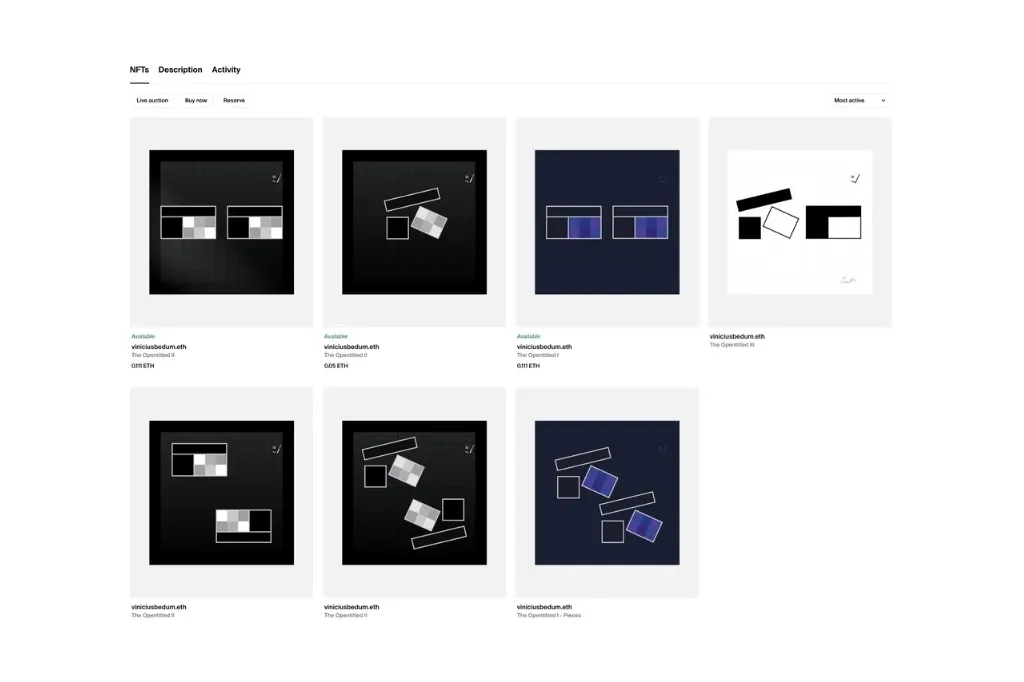
On-chain record: contract · Ethereum · ERC-721
From digital to physical
One of the Opentitled works left the digital. It was turned into a physical piece, printed in fine art, fully faithful to the on-chain version.
The work came to occupy physical space, where it exists and stays. The NFT became an object.
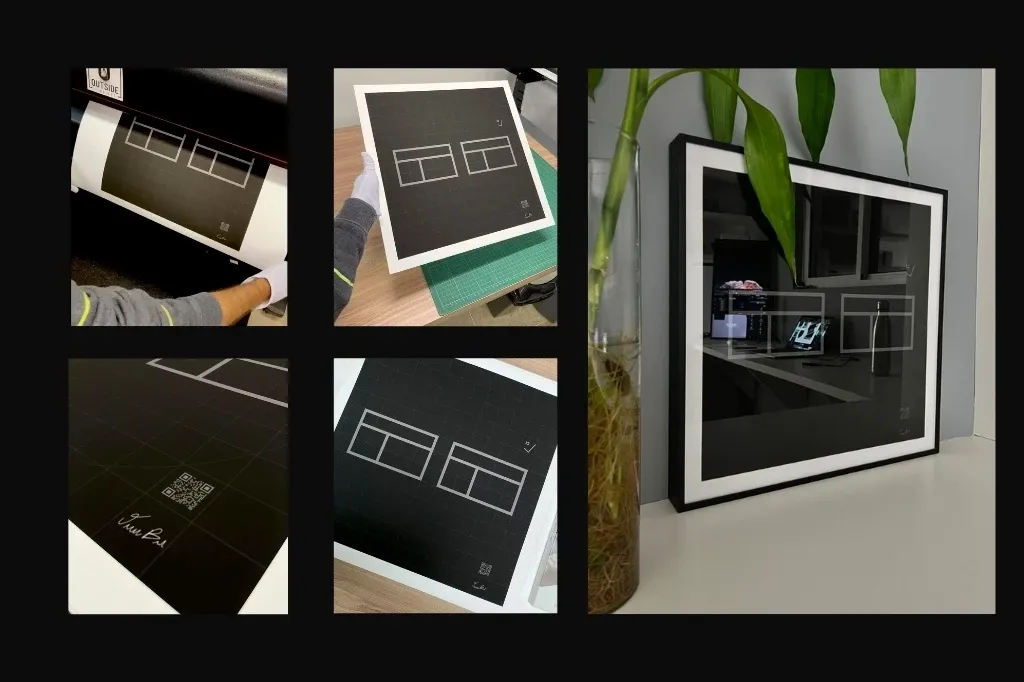
Exhibitions
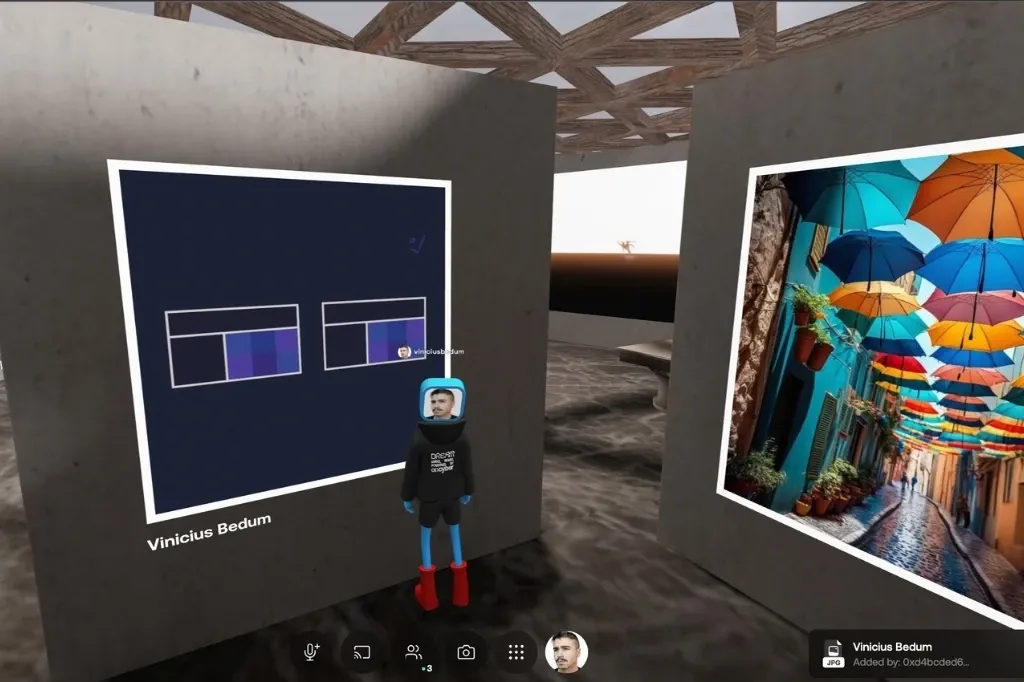
The works were also shown physically and in the metaverse.
Casa NUA, in São Paulo, hosted the works from 12 to 15 October 2023 (post on X).
They were presented on TV panels, as permanent screens. What you saw there was the digital file itself, shown as it is, with no simulation or reproduction.
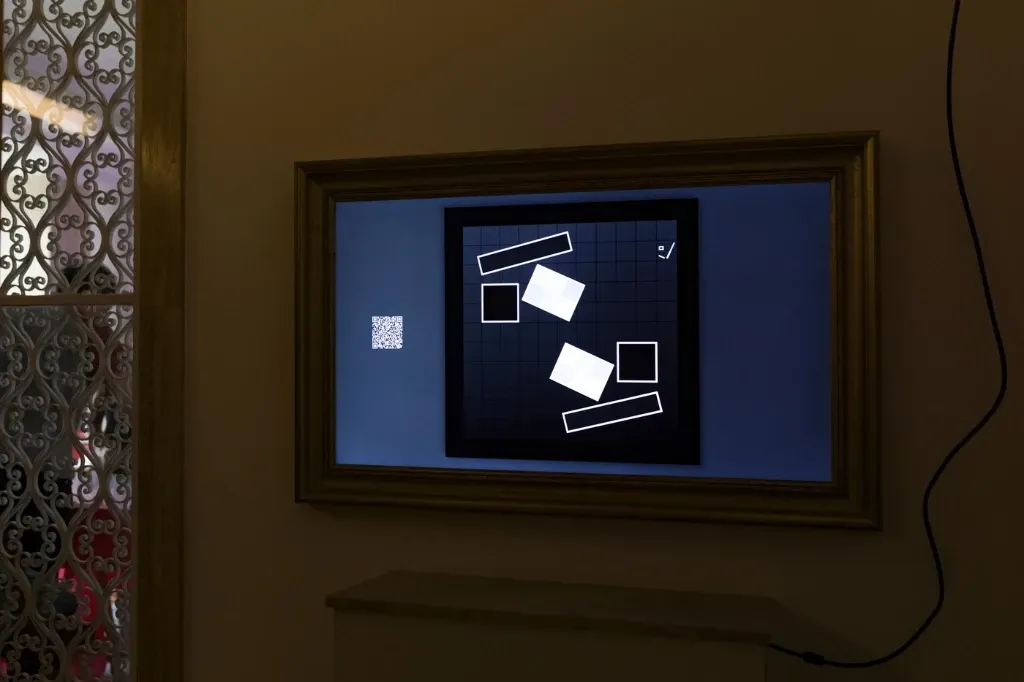
At NFT NYC, the collection was present from 3 to 5 April 2024, at 8PM UTC (post on X).
It was an international exhibition. It reinforced the project as digital art that does not depend on physical borders.
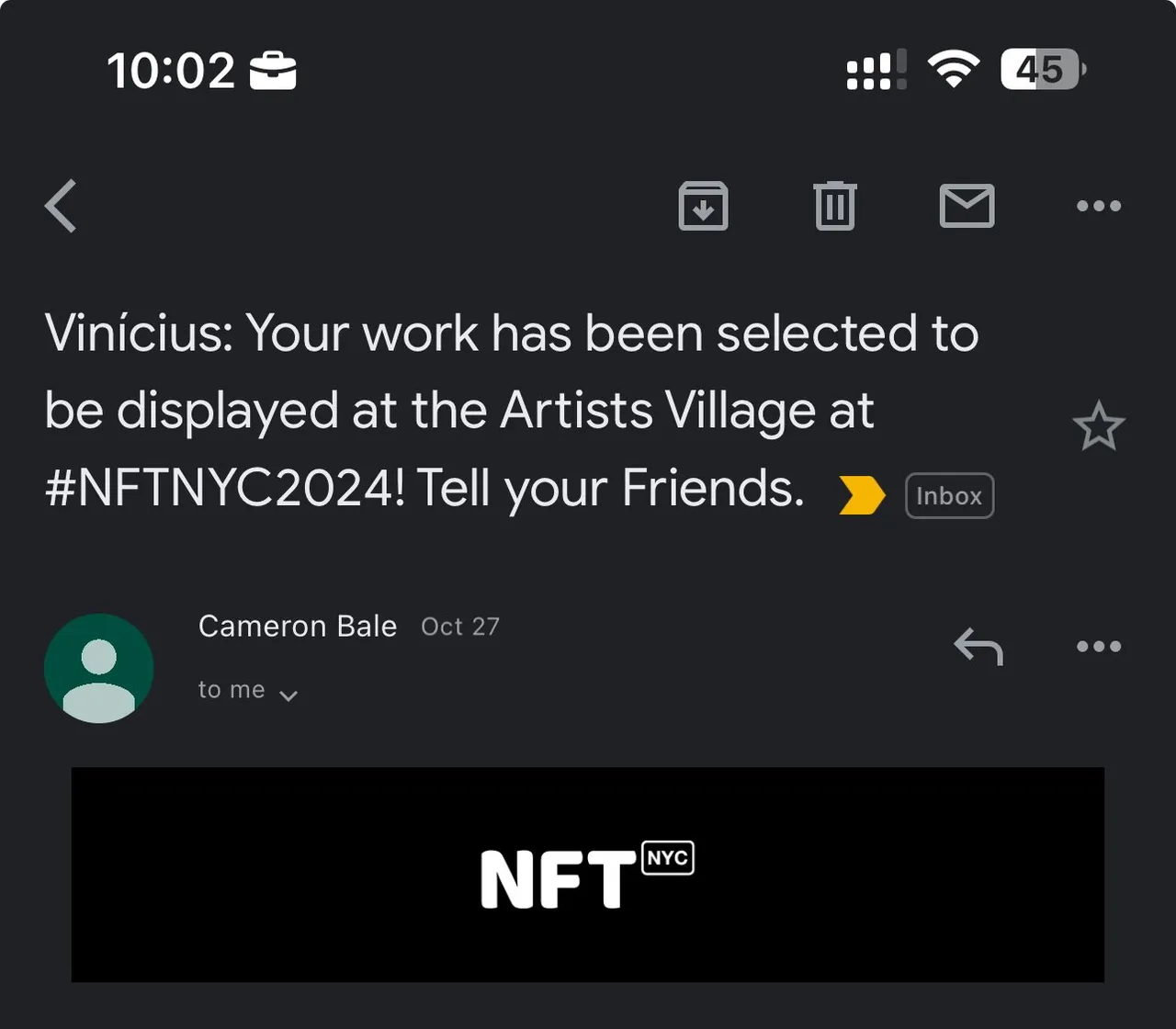
At Zeitls Gallery/Art Fusion, the works were shown on 28 August 2023, at 8PM UTC, in the Oncyber metaverse.
Result
182 pieces were minted across three collections: 147 in the Untitled Edition, 28 in the Opentitled and 7 in The Opentitled.
Of the 147 from the first phase, 84 were burned to redeem the 28 of the second. The logic allowed for 49 pieces in the second phase, and 28 were redeemed.
As of 29 September 2026, 55 distinct wallets held pieces from the project.
The value of the project is in time.
It is the time since creation, the time recorded on the blockchain, the time between transformations and the time the work keeps existing.
Some pieces were free, others were for sale and others never circulated. None of that changes what matters.
The work exists, the record remains and the history is on-chain.

On-chain record: contract creation transaction · Polygon
The pieces stay on-chain with their owners. The work left the digital and gained a physical presence in Brazil, at Casa NUA, and internationally, at NFT NYC.
Sources and further reading
Post · X
The post that started the Untitled Edition@viniciusbedum · 26/06/2023
The post that started the Untitled Edition.
Post · X
On-chain burn system@viniciusbedum
Post explaining the on-chain burn system of the second phase.
Post · X
Exhibition at Casa NUA@viniciusbedum · 12 to 15/10/2023
Post about the exhibition at Casa NUA, in São Paulo.
Collection · OpenSea
Untitled EditionPolygon · ERC-721
On-chain record of the Untitled Edition collection.
Contract · Polygonscan
Untitled Edition contractPolygon · ERC-721
On-chain record of the Untitled Edition contract.
Contract · Polygonscan
Opentitled contractPolygon · ERC-721
On-chain record of the Opentitled contract.
Contract · Etherscan
The Opentitled contractEthereum · ERC-721
On-chain record of The Opentitled contract.
Work · OpenSea
Fine art physical piecePolygon · ERC-721
The Opentitled work that became a physical fine art piece.
Metaverse · Oncyber
Zeitls Gallery/Art FusionOncyber
Zeitls Gallery/Art Fusion gallery in the Oncyber metaverse.
Transaction · Polygonscan
Opentitled contract creationPolygon
Transaction that created the Opentitled contract on Polygon.